

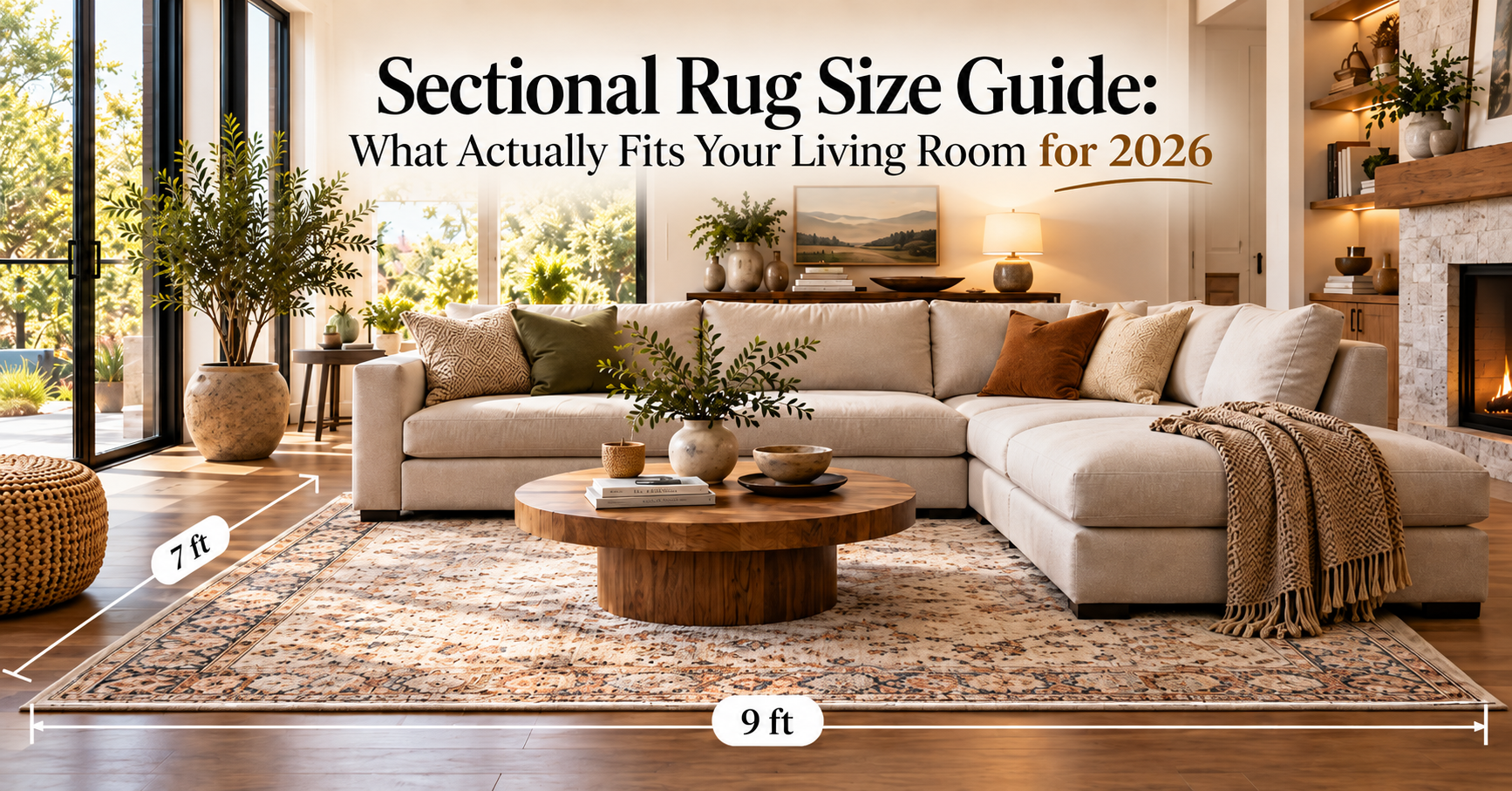
You finally got the sectional. It looked perfect in the store. You pictured movie nights on it, maybe a lazy Sunday nap too. Then the delivery guys set it down. Half the living room disappeared. Your old rug looked like someone had dropped a bath mat in the wrong spot.
Nobody warns you about sectional rug size until the couch is already sitting there, next to a rug that suddenly looks about ten years too small for the job.I used to think rug shopping was easy. Find something close to the couch’s color. Buy it. Forget about it. Then I bought an actual sectional and figured out how wrong that was.
Get the rug too small. The couch looks like it is floating out there all alone. Get it too big. Somehow the room feels smaller. Not bigger. It took me a week of living with it to understand why. By then I was already annoyed at furniture that had done nothing wrong.
Good news though. This gets a lot less confusing once you know what to actually measure. Look at the shape of your couch. Look at how big your room is too. Picture how you want it to feel the second you walk in. Get those three things straight. The rug size pretty much picks itself from there.
So here’s what this guide actually walks through. How to measure a sectional properly. Which rug sizes fit which sofas. How to place the rug once it’s home. And which materials survive daily life when kids and pets are involved.
What Sectional Rug Size Actually Means
Sectional rug size just means the rug that actually fits your sofa. Not squeezed to one side, not lost in the middle of the room either. It’s more than covering floor space. Get the size right and the seating area feels like one thing. Get it wrong and people notice, though they usually can’t say why. Nobody walks in and announces your rug is nine inches too small. They just feel like something’s slightly off.
How a Rug Changes the Whole Room
Picture the seating area without a rug for a second. Cold floor, no visual anchor, everything feels separate. A good rug fixes that. It pulls your eye across the whole space, not just the couch by itself. It ties the coffee table and side chairs into the same layout. Skip the rug. Or grab the wrong size. Either way, even an expensive sectional ends up looking half finished. Like the room stopped partway through being decorated.
The Mistake I See All the Time
Someone buys a rug sized for the coffee table and calls the job done. Meanwhile the actual sectional sits on the bare floor behind it, completely disconnected from everything. That’s mistake number one. Mistake number two runs the opposite direction: a rug so big it touches every wall in the room. Somehow that makes the space feel smaller instead of bigger. Since there’s zero breathing room left anywhere.
Getting the Size Right Saves You Money
Order the wrong size and here’s what happens next. A return shipment. Maybe a restocking fee. Possibly a second attempt, sometimes even a third, before something finally works. Rugs cost real money. The good ones weigh enough that shipping them back isn’t cheap either. Ten minutes with a tape measure now saves you a headache later. I learned this one the hard way, with a rug that looked perfectly fine online and showed up looking like a placemat under a king size bed.
How to Measure Your Sectional for a Rug
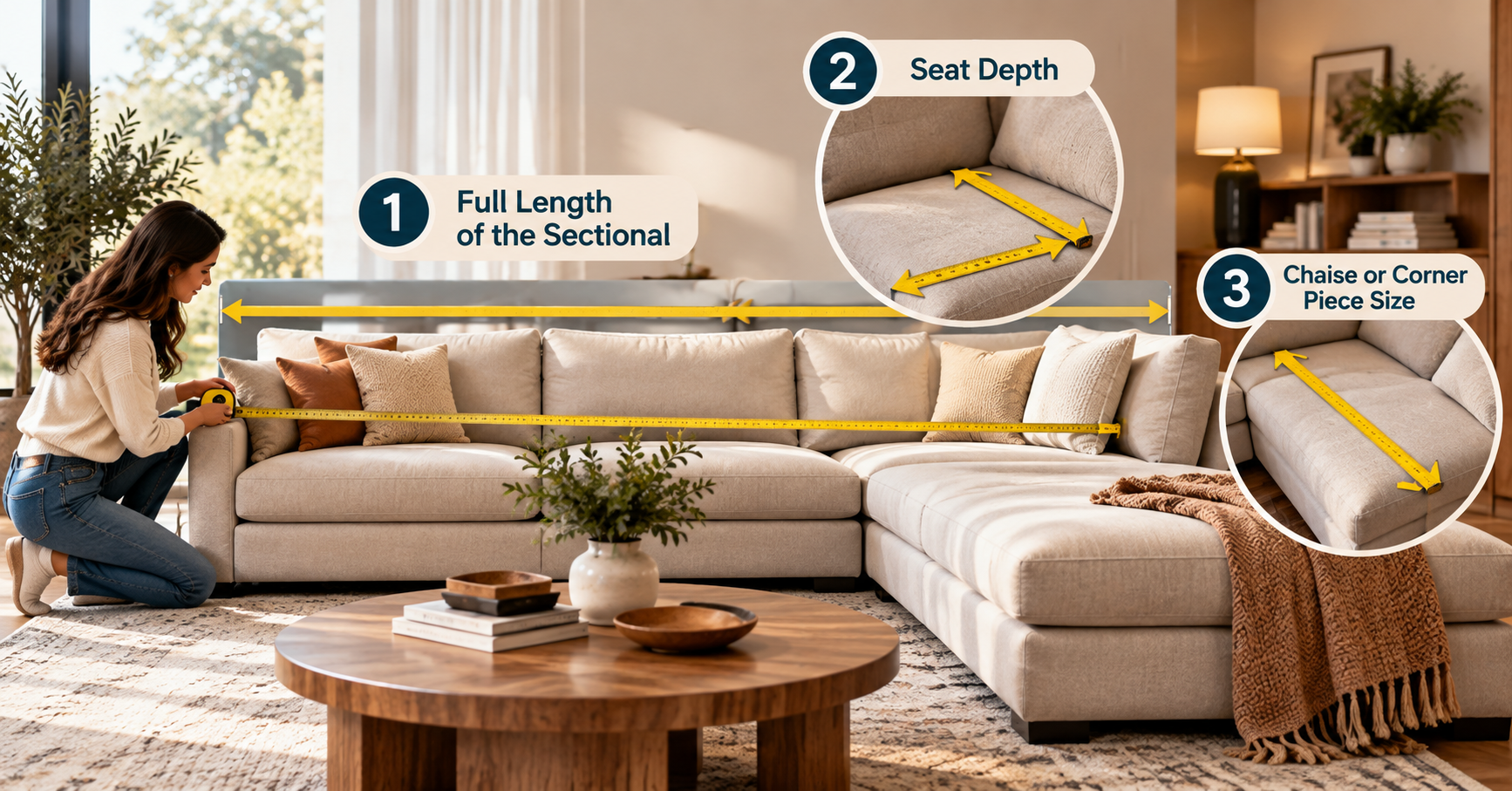
Before you open a browser tab, grab a tape measure. You need exactly three numbers. Full length of the sectional. Seat depth. And the size of whatever chaise or corner piece sticks out from the main run. Those numbers, not a guess made under showroom lighting, tell you what you actually need.
Length and Depth
Start with length, measuring arm to arm across the whole sofa. Next, measure depth. Start at the front edge of the cushions. Stop where the sofa touches the wall. Write both numbers down somewhere safe. A notes app works well. The back of a receipt works too. Together, these give you your minimum footprint. That’s the smallest rug your sectional can sit on without looking cramped.
Measuring Around a Chaise or Corner
Most people trip up right here. They measure the main run of the sofa and completely forget the chaise sticking out to the side. That missing chunk can be two feet or more. It bumps your rug size up a whole category. The fix is simple. Measure the entire L shape, corner to corner, chaise included every time. Skip this step and you’ll end up with a rug that only fits half your sectional.
Leaving Room to Walk Around
Once you know your footprint, don’t stop there. Check the space around it too. My own rule is about a foot and a half of bare floor between rug and wall. Go any tighter and the room starts to feel boxed in, no matter how nice the rug itself looks. While the tape’s still out, measure the room’s full width. That number is your ceiling, basically the biggest rug the space can honestly take.
Rug Sizes for Small, Medium and Large Sectionals
Now match those numbers to a standard rug size. Most rugs come in just a few common sizes. Picture 6×9. 8×10. 9×12. 10×14. Here’s roughly how those line up with the sectional lengths people actually deal with.
Small Sectionals, Under 90 Inches
Under ninety inches, a 6×9 or 8×10 will probably do the job. Good fit for apartments and smaller rooms. It won’t swallow the whole floor. The front legs should still land on the rug fine.
Medium Sectionals, 90 to 120 Inches
Most family living rooms land right in this range. An 8×10 handles the smaller end. A 9×12 gives you a bit more breathing room. Most sectionals this size leave every front leg resting comfortably on the rug.
Large Sectionals, Past 120 Inches
Once you cross 120 inches, a 9×12 rug is usually the safe pick. A U shaped sofa asks for a 10×14 more often than not. A double chaise U shaped sofa sometimes needs a full 12×18 to cover every leg. That’s a big rug. Check if your room can really hold it before you buy.
Rug Placement Styles That Actually Work
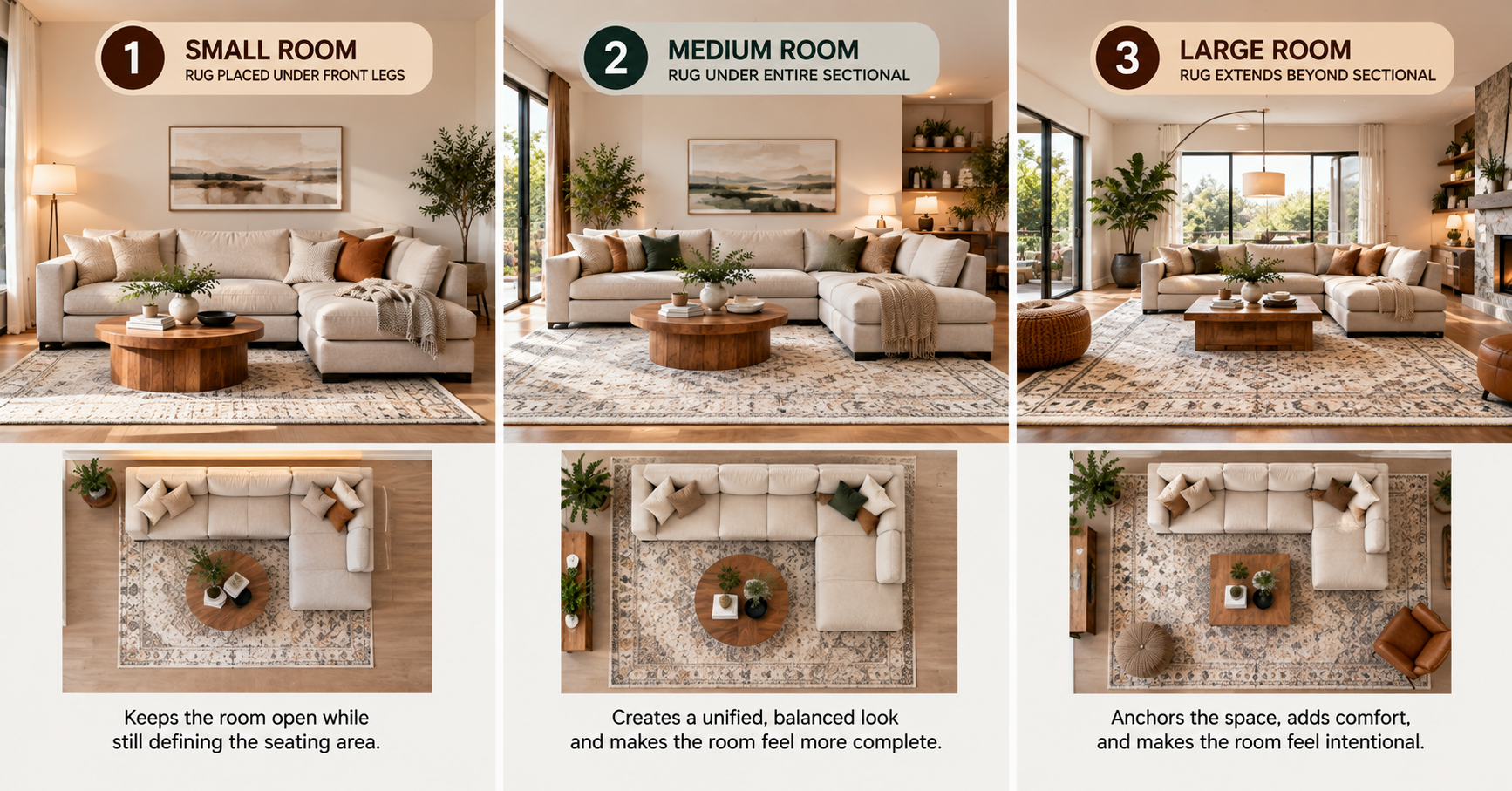
Size only handles half the job. Placement decides how the room actually reads, sometimes even more than size does. The right placement can make the whole living room feel more balanced, open, and intentional. Three setups cover most situations, and each one works best for a different room size.
All Legs on the Rug
Every single leg of the sectional sits on the rug here, no exceptions. This anchors the piece to the floor and tends to photograph the best. The tradeoff is cost. You need a bigger rug and a room with room to spare around the edges. If your budget and your square footage both allow it though, this one pays off.
Front Legs On, Back Legs Off
Medium sized rooms usually land here. Front legs rest on the rug, back legs stay on the bare floor behind it. You still get a visual connection between the sectional and the rug, minus the cost of the biggest size on the shelf.
Rug Placed Just in Front
In small apartments the rug sometimes sits entirely in front of the sofa. No legs touch it at all. It still marks off the seating area without eating up the whole floor. Most people land on this option because nothing bigger fits, not because they planned it that way. Funny thing is, it usually looks better once it’s actually down than photos of it ever suggest.
Matching Shape to L Shaped and U Shaped Sectionals
Shape matters nearly as much as size does. Get the size perfect but the shape wrong. The rug will still look off underneath the sofa. Rectangular rugs win most of the time here, mostly because they match the straight lines of a standard sectional. A few exceptions still exist though.
Rectangular Rugs for L Shaped Sectionals
For an L shaped sectional, rectangular is the safest bet. Square works fine too. The straight edges match the sofa’s own lines. That keeps the layout looking neat, even in a tight room.
Round or Oval for a Softer Look
Want something softer? A round or oval rug works as an accent near the sectional. It does best in smaller rooms, where it only has to cover part of the seating area anyway.
U Shaped and Double Chaise Sectionals
U shaped sectionals with a double chaise really need a big rectangular rug, often in the 12×18 range, just to reach every arm. A round rug simply doesn’t cover enough ground for this shape. Rectangular wins every time here.
Common Mistakes People Make With Sectional Rug Size
Even careful planners trip on the same handful of mistakes. Knowing them early can save you an expensive redo. Most come down to one thing. A skipped measurement. Or a size that looked fine under showroom lights and looked wrong once it got home.
Picking a Rug That Is Too Small
A rug that stops halfway through your sectional leaves the whole setup looking unfinished. Torn between two sizes? Pick the bigger one, every time. Fixing an undersized rug later is far harder than returning one that turned out slightly too big.
Forgetting the Chaise Section
This mistake alone accounts for most wrong sized rugs. People measure the main run of the sofa and forget the chaise entirely. The fix stays the same as before: measure the full shape, corner and chaise included, not just the straight part.
Leaving No Walkway Space
Here’s the part nobody expects. Shove the rug flush against every wall and somehow the room reads smaller, not bigger, like the space just shrank on you overnight. Never figured out the exact reason for that one, but I’ve watched it happen in three different apartments now. Give it at least a foot of open floor along the edges instead. Your shins will thank you too, since that’s the strip people actually walk through on their way to the kitchen.
Rug Material and Thickness for Sectional Living Rooms
Everyone obsesses over size and shape and then forgets the rug still has to survive actual life underneath a sectional. A sectional lives hard. Somebody’s stretched out on it every night, there’s a dog circling three times before flopping down, a kid dumps popcorn on movie night at least once a month. Whatever’s underneath all that needs to shrug it off, not go flat and sad by next winter.
Wool for Durability
Wool holds its shape well under heavy furniture and feels genuinely soft underfoot. Yes, it costs more upfront than synthetic rugs. But it tends to last for years. Even with kids around. Even with pets around. Even with a steady stream of guests coming through.
Synthetic Options for Busy Households
Polyester rugs resist stains. Polypropylene rugs do too. Both wipe clean fast. That makes them a solid pick for a home with young kids. It also works well with a shedding pet. They cost less too, so going a size bigger won’t wreck the budget.
Rug Pads Matter More Than You Think
A rug pad keeps the whole thing from sliding under a heavy sectional. It adds a bit of cushion underfoot too. Skip it and you’ll likely shorten the life of an otherwise decent rug in a couple of years.
Sectional Rug Size Chart for Quick Reference
Need the fast answer? This chart lines up sectional size with the rug size most designers grab first. Use it to narrow things down, then let your actual room decide the rest.
Small sectionals (under 90 inches): A 6×9 or 8×10 usually does it. Good for apartments and it holds up fine in a smaller living room once a coffee table’s in the mix.
Medium sectionals (90 to 120 inches): An 8×10 gets the job done here. A 9×12 works too. This covers most sectionals found in a typical family living room.
Large sectionals (over 120 inches and U shaped with a double chaise): Look at a 9×12. Try a 10×14. Or even a 12×18. Room size decides some of it and honestly, so does how many legs you’re okay leaving off the rug.
Conclusion
Once you’ve got the numbers, picking the right sectional rug size stops feeling like guesswork. Measure the sectional first. Include the chaise. Match that number to a standard rug size from this guide. A quick pass with a tape measure beats a trip back to the store. Every time.
Stuck between two sizes? Go bigger.
A rug on the larger side almost always beats one
That is too small. Your sectional should sit fully on the rug. It should not hang off one edge looking half finished.
Placement matters just as much as size does. All legs on, front legs only and the rug placed just in front. Whatever placement you land on, leave a little bare floor around it. Rooms need room to breathe too.
Get the size right. Pick a shape that matches your sectional. Toss a pad underneath too. Do all three. The room will finally feel done, not halfway there. Grab your tape measure. Check the chart above. Shop knowing exactly what you need before you buy anything.
FAQs
What rug size actually fits a sectional sofa?
It depends on your sectional length. Under 90 inches, go with a 6×9. An 8×10 also works. For 90 to 120 inches, try an 8×10 first. A 9×12 does the job too. Bigger than that and shaped like a U, look at a 9×12. A 10×14 works. Even a 12×18 can work.
Should all the legs of a sectional sit on the rug?
Not really necessary. Plenty of rooms work fine with just the front legs on the rug and the back legs on the bare floor. It still ties the sectional to the rug without forcing you into the biggest size available.
What size rug do I need for an L shaped sectional?
For most L shaped sectionals, don’t go smaller than a 9×12. If yours runs oversized, a 10×14 sits better. Measure the whole L shape, chaise included, since that part gets missed constantly.
Can a rug be too big for a sectional sofa?
It can, more often than people expect. A rug that touches every wall can actually shrink how the room feels. Not grow it. Leave twelve to eighteen inches of bare floor between the rug and the wall. That keeps some breathing room in the space.
What shape rug works best with a sectional?
Rectangular rugs are the safest bet for most sectionals. Square rugs work too. Their straight edges follow the sofa’s own lines. Round rugs work fine as a softer accent. Oval rugs do too. They rarely suit U shaped sectionals well though.