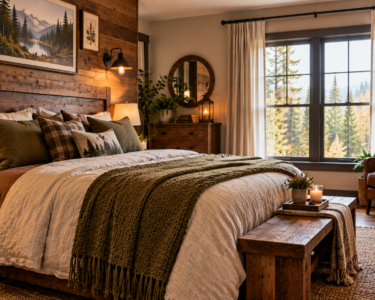

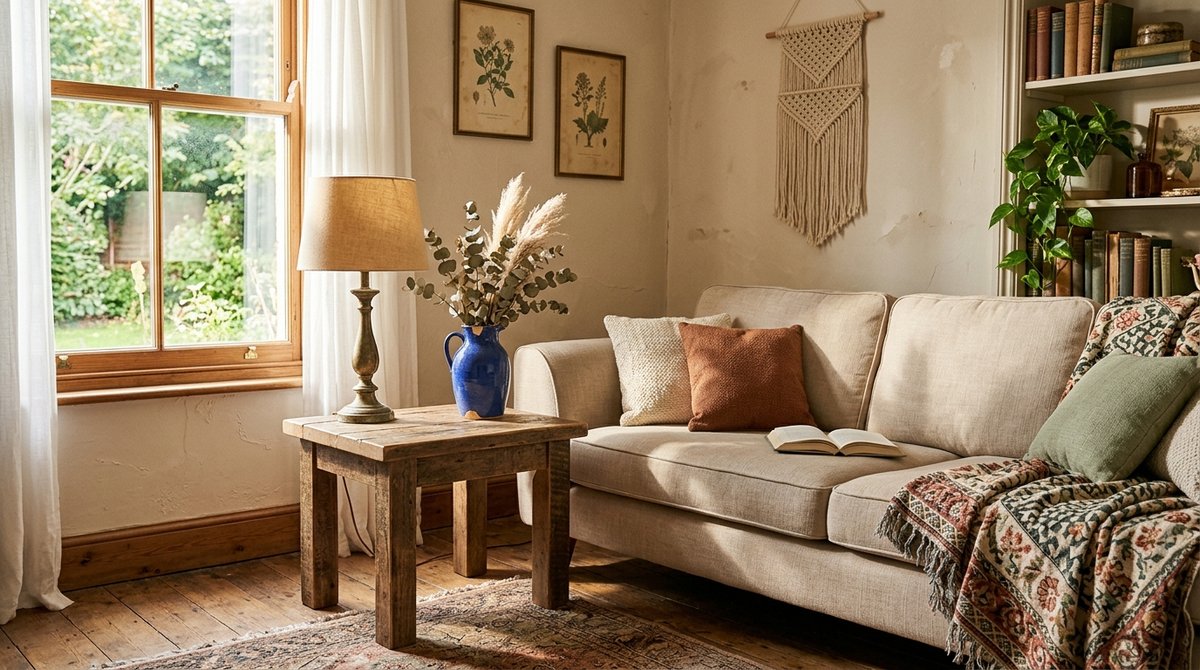
Picture this. You step into a charity shop, only needing a phone charger. Twenty minutes later you’re at the counter with a brass lamp under your arm and a blue vase that has a tiny chip on it. Oops. At home, you put the lamp on the little table by your couch and flip the switch. Honestly, that’s the moment thrifted home decor made sense to me.
The room just felt lived in, like it finally had some history. That’s what thrifting does. It’s cheap, it has a past and nobody else on your street has the same lamp. Also, one more good thing didn’t end up in a landfill. Your friends will ask where it came from and the real story is way better than a store name.
This thrifted home decor guide is pretty simple. Here is what you’ll learn: where to shop, what to look for and how to wash your stuff. Then we’ll make it all look planned. You don’t need big money or a trained eye. A bit of patience and a tape measure will do. People fill whole rooms this way. Most people just go slowly. They only add one piece each time.
Table of Contents
Why buying thrifted just works
A lot of people start with thrifted home decor just to save cash. But that’s only half of the reason to love it. Old stuff is often made better than the flat-packed things in big stores. It has a look you can’t really buy new, either. And if used things make you nervous, these reasons might help.
The price is way lower
Say a solid wood side table costs hundreds in a store. With thrifted home decor, you might pay just a small slice of that. Paint it or swap the knobs and you’re still way under the store price. You can’t lose much here. And if it flops? Then you’re out ten bucks. Not a big loss.
The quality often lasts longer
Lots of old pieces are real wood and thick ceramic, not thin boards. Scratched up an old dresser? Just sand it down. A cheap new bookcase with a broken shelf? That’s usually the end of it. Lift something up at the store. Heavy usually means well made.
It’s better for the planet
When you buy a used lamp or mirror, nobody has to make and ship a new one. A perfectly good thing stays out of the trash, too. Does that fix climate change? No. Picture a whole neighborhood doing it for years, though. That’s a lot of saved stuff.
Best places to hunt for secondhand decor
Good thrifted home decor doesn’t just sit on the first shelf. You’ve got to hunt a little. Some places are cheap, some have weird fun stuff and some get new things every single day. Every shop feels different. You’ll only find your favorite by going inside. Go to a few shops. Go back a few times. You will find the best shops fast.
Charity shops first
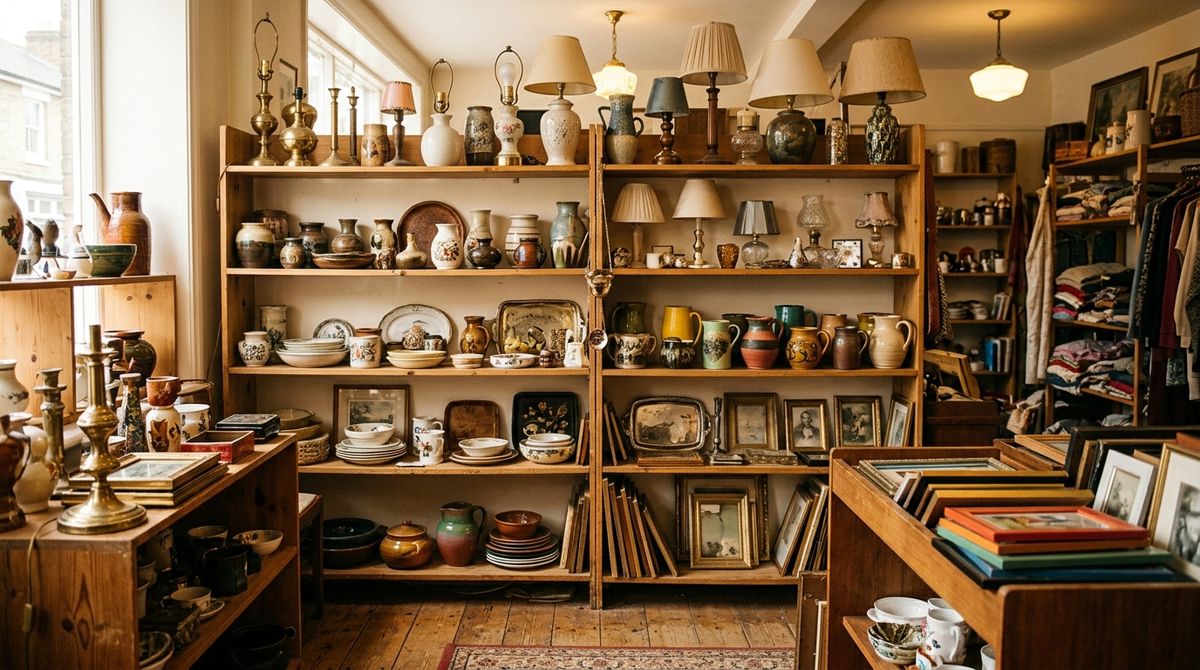
A lot of them run on volunteers, which keeps prices down. They put out new items a lot, so even a short trip can pay off. Check the home section first. After that, look in the furniture room and the back corner. The staff will sometimes put a tag on an old frame or tray without knowing it’s worth more.
Garage sales and estate sales
Estate sales are where you find whole households of older pieces at honest prices. Go early for the best picks. On the last day, go late. The sellers just want things gone, so prices fall. Bring cash. Bring your tape measure too. And think ahead about how that mirror gets home.
Online sites and neighborhood groups
You can hunt on Marketplace and buy groups without leaving the couch. Save a search for an old lamp or a wood mirror. Your phone will tell you when one is posted. Buying something small? Pick a busy public spot to meet. Buying big furniture? Check it over well before you hand over any money.
What to look at before you buy
Cheap isn’t cheap if it breaks in a month. A few minutes of checking in the shop saves you from most bad purchases. You don’t need fancy tools. Your eyes and hands do most of the job. When you know what is fixable and what isn’t, the bad buys get easy to skip. Here’s my routine, every time.
Cracks and loose parts
Turn it over if you can. Rub your hand on each edge. A small crack in glass or pottery? It’ll probably get bigger. Wobbly chair leg? Sticky drawer? Those are often easy to fix. A big split in the wood is a different story. So are joints that rattle when you shake the piece. Walk away.
Smells and stains
Smells are the hardest thing to get out. Open the drawers and doors. Then sniff. Smoky? That smell can stick to cloth and wood for years. A stain on hard stuff is easy to scrub. But a stain that’s sunk deep into a sofa? Nope.
Check measurements and style fit
Before you go, measure the spot at home. Short on space? These small room makeover ideas show how to fit more into less floor. Put the number in your phone. Imagine a mirror that’s two inches wider than your wall space. It’s still just a pretty mirror, sitting in your garage. Also ask if it matches your colors. A deal stops feeling like a deal if it looks wrong in the room.
Cleaning and fixing your finds
Wash every find at home. Do it even if it looks clean. Start gentle. Only grab stronger stuff if the gentle way fails. Going slow keeps old finishes safe. Plus, your thrifted home decor won’t carry dust or mold into your house. A clean piece looks loved, not just used. Ten minutes is a small price. I wash even the tiny stuff.
Start with soap and water
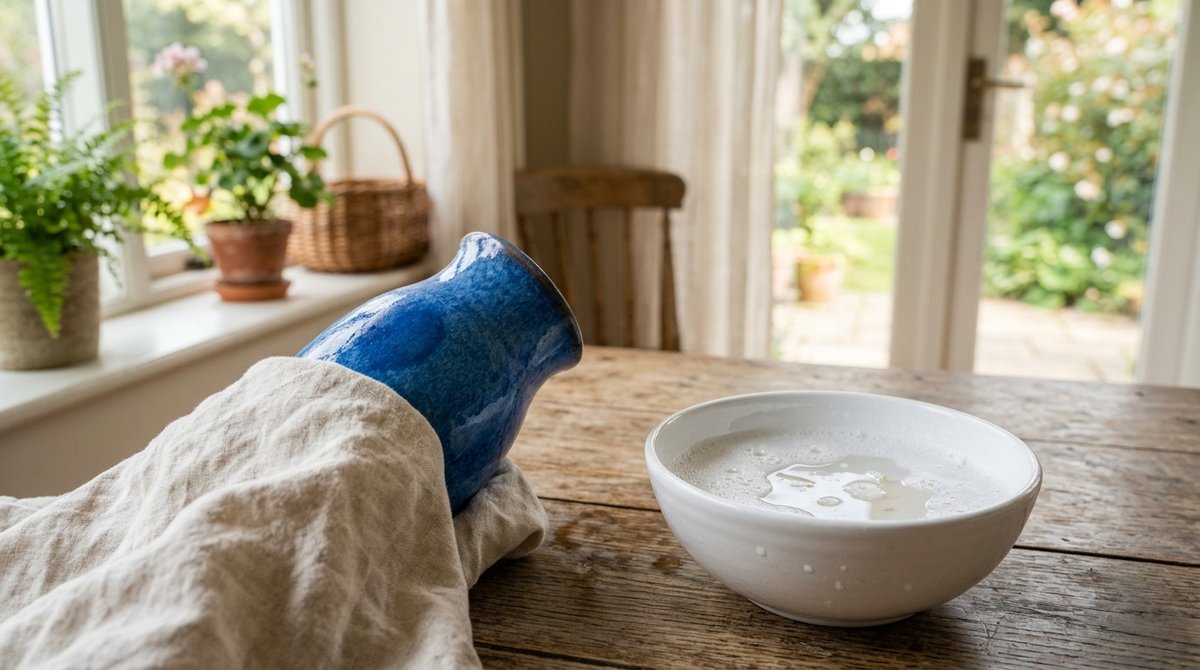
Grab a bowl. Fill it with warm water. Squeeze in some dish soap. Dunk a rag in it. That cleans most pottery and sealed wood. Go easy when you rub. Towel dry it after. Don’t leave bare wood or glued parts sitting in water. Glue hates water. It can make wood peel too.
Fix the little problems
Wobbly joints? Wood glue. Small scratches? A wax stick hides them. Screws came loose? A screwdriver takes a minute. Chipped vase? Epoxy glue can fix it. Then it is only for looking at. I’d never drink out of it, though.
Try paint or new handles
One coat of paint and that tired old cabinet looks new. New handles help too. Rough it up with sandpaper first. Paint needs something to hold on to. Try a little on the back, just to see. Wet paint lies. It dries darker.
Styling secondhand pieces at home
My favorite rooms look like someone really picked every piece. Walk away for a bit. Then look at the shelf again. Try seeing the whole room like one photo. None of it needs design training. A few small habits make mixed finds look planned. That way a mixed room still looks tidy.
Mix old pieces with plain new ones
Put an old wood stool by a plain new sofa. Now the stool is what people see first. Simple walls and plain fabric help old things stand out. Love a rustic look? These modern farmhouse interior ideas pair nicely with old wood pieces. All old stuff can feel stiff, like a museum visit. A few plain pieces make it feel even. Adding a rug under it? This sectional rug size guide helps you pick the right size.
Use two main colors
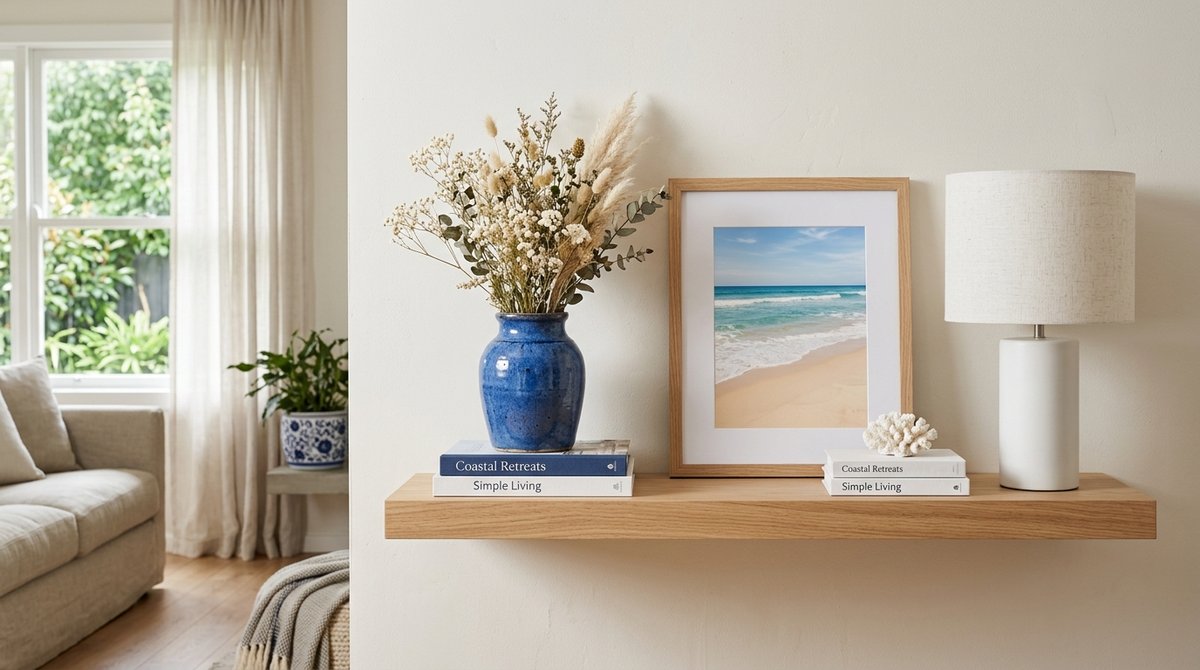
Start with two colors. Then look for finds that repeat them. Maybe blue and white. Blue vase, white lamp, beach photo. All on one shelf. Looks good, right? Different years? Mix them anyway. Colors that repeat keep the room calm. The shapes can be all different.
Group items by height and shape
Make little groups of things on your shelves and tables. Three or five things in a group is the easiest to get right. Put something tall by something low. Give each group some room. Try a tall lamp with a low bowl first. It looks calm. Blank space counts as much as the stuff does.
Final thoughts
Thrifted home decor is worth taking slow. Saving money is nice, but my favorite part is a home that feels like you. Your rooms fill up with things that have stories and good items stay out of the dump. No catalog can copy that. Thrifted home decor is a low cost way to make your home feel cozy. Every piece had a life before you and now you decide what’s next. You really don’t need to plan it all out.
Just begin small. Go to one shop this weekend with a bit of cash. Take home one thing you really love. Look it over for cracks. Wash it. Put it on a table you pass every day. After one good find, you’ll want more. Each trip helps you spot good things faster. A little mess at the start is fine. Rooms change. So do the things you like. Bring a bag and go into a shop near you. Look around.
Quick questions
What is thrifting?
Thrifted home decor means buying things that other folks owned first. Think lamps, mirrors and small tables to begin with. Look in charity shops, flea markets and estate sales or shop online for more. Some are real vintage. Most are just secondhand.
What sites sell used decor online?
Start with Facebook Marketplace. eBay and Etsy are good too. So are local buy nothing groups. Check the photos. Ask the seller for the size. Read the reviews and look at the shipping cost, since you can’t go get it.
How should I clean thrifted things?
Use a soft cloth, warm water and just a little soap. Easy. Then dry it well. Test strong cleaners on a hidden spot. Keep bare wood dry. Read the label on fabric. Does the label say no hot water? Then skip the hot water.
Lead paint worries?
Watch out for paint from before 1978. The old paint might have lead. Don’t sand it or scrape it. Lead dust floats up and gets in your lungs. Lead test kits are cheap. Or just call an expert. For more details, read the EPA’s lead safety guide.
Making finds look nicer?
Clean it up and fix the little stuff. Group things on purpose, too. Paint it. Swap the knobs. Old stuff looks new fast. Keep the colors few. Give each thing space.